Explosions Rock Iran: US-Israel Launch Joint Offensive Amid Heightened Tensions
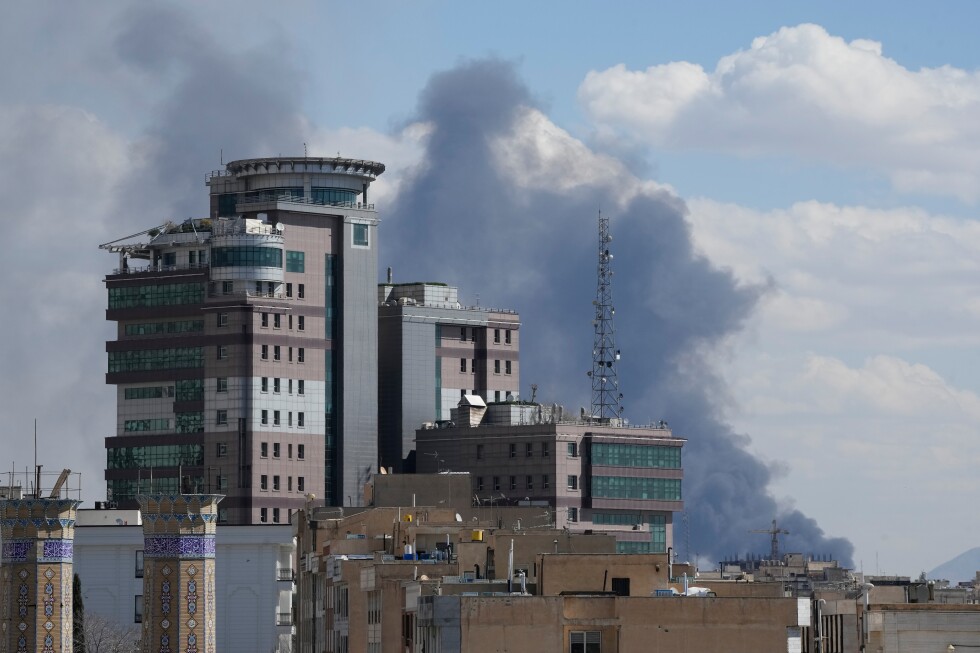
In a dramatic escalation of Middle East tensions, Iran has reportedly been rocked by a series of powerful explosions across multiple cities, including its capital, Tehran. These events follow a stark announcement from former US President Donald Trump, confirming that the United States had launched "major combat operations" against Iran, undertaken in close coordination with Israeli armed forces. This joint offensive marks a significant turning point in the region, signaling a direct and forceful approach to perceived threats posed by the Iranian regime.
The coordinated strikes have sent shockwaves across the globe, prompting widespread analysis of their immediate impact and long-term implications. The stated objective from both Washington and Jerusalem is clear: to dismantle Iran's military capabilities, especially its ballistic missile program, and to prevent the regime from acquiring nuclear weapons – a capability that could fundamentally alter the balance of power and lead to scenarios where Iran's nuclear threat becomes a critical focus of US-Israel strikes. The swiftness and scale of the operation underscore the gravity of the intelligence and strategic calculations that led to such a decisive action.
A Coordinated Offensive Against Strategic Targets
Reports from inside Iran describe a morning of chaos and uncertainty. Strong detonations were heard echoing across Tehran, soon followed by two plumes of thick smoke rising from the city's central and eastern districts. Iranian news agency Isna specifically reported that the Pasteur district was targeted – a highly sensitive area known to house the residence of Supreme Leader Ali Khamenei and the presidential office. This suggests a precise targeting strategy aimed at the heart of Iran's political and military establishment, intended to send an unequivocal message.
However, Tehran was not the sole focus of the offensive. Explosions were also reported in other key Iranian cities. Isfahan, a city in central Iran with significant industrial and military infrastructure, including facilities linked to Iran's nuclear program, was also hit. Further reports from the Fars news agency indicated strikes in the holy city of Qom (central Iran), Karaj (west of Tehran), and Kermanshah (western Iran). The widespread nature of these attacks, confirmed by the Israeli army's statement about targeting "multiple military objectives belonging to the Iranian regime in western Iran," points to a comprehensive effort to degrade various facets of Iran's military apparatus, including its ballistic missile production sites and naval capabilities, which could otherwise be used by iran bombarde israël or other regional targets.
The selection of these diverse targets suggests a multi-pronged strategy. Striking near the Supreme Leader's residence implies a message aimed at the highest levels of Iranian leadership. Targeting Isfahan and other industrial zones could be an attempt to cripple Iran's capability to produce advanced weaponry. Meanwhile, striking military objectives in the west could be intended to degrade ground forces or logistical hubs that might support regional proxy groups or defensive operations. This extensive targeting reflects a deep concern over Iran's overall strategic posture and its potential to project power.
Leaders Speak: Justifying the "Major Combat Operations"
The joint US-Israeli offensive was accompanied by strong statements from both nations' leaders, offering insights into their motivations and objectives. Former US President Donald Trump, in his announcement of "major combat operations," declared the goal to be the defense of the American people by "eliminating the imminent threats that the Iranian regime represents." He characterized the Iranian leadership as a "vicious group of very tough and terrible people" and made a direct appeal to the Iranian populace to "seize power." Trump's rhetoric emphasized not only defensive measures but also an assertive stance against the regime's infrastructure, vowing to "destroy their missiles and annihilate their ballistic industry" and to "annihilate their navy." This uncompromising language underscores the belief that negotiations, which had reportedly been ongoing for weeks, had failed, necessitating a military intervention.
Echoing these sentiments, Israeli Prime Minister Benjamin Netanyahu addressed his citizens, stating that Israel and the United States had launched an operation "aimed at eliminating the existential threat posed by the Iranian terrorist regime." Netanyahu underscored the historical animosity, recalling the Iranian regime's forty-seven-year history of chanting "death to Israel" and "death to America," and accusing it of shedding blood, assassinating Americans, and massacring its own people. He articulated Israel's primary concern: "We must not allow this murderous terrorist regime to acquire nuclear weapons that would allow it to threaten all of humanity." This highlights the preventative nature of the strikes, designed to avert a future where a nuclear-armed Iran could potentially use its capabilities to iran bombarde israël or other adversaries. The unified front presented by Trump and Netanyahu as they explain major attacks on Iran underscores the perceived urgency and shared strategic interests driving this operation.
The alignment of rhetoric from both leaders illustrates a shared strategic objective to neutralize Iran's perceived threats, particularly its nuclear ambitions and ballistic missile capabilities. For Israel, the threat is often framed as existential, given Iran's direct calls for its destruction. For the US, the concern extends to regional stability, the safety of its allies, and the broader implications of nuclear proliferation. These statements serve not only to justify the military actions to their respective populations but also to send a clear message to the Iranian regime and the international community about the resolve behind these strikes.
Geopolitical Ramifications and Regional Stability
The joint US-Israeli offensive against Iran carries profound geopolitical ramifications, potentially reshaping the dynamics of the Middle East for years to come. The direct military intervention by the United States, in concert with Israel, signifies a significant departure from previous approaches that often prioritized diplomacy and sanctions. This action explicitly signals the failure of weeks-long negotiations, implying that diplomatic avenues were exhausted or deemed ineffective in curbing Iran's strategic programs.
For regional stability, the immediate impact is likely to be increased volatility. Iran's response, which is yet to be fully revealed, will be a critical factor. The potential for escalation is high, with various proxy groups affiliated with Iran throughout the region (such as Hezbollah in Lebanon, Houthi rebels in Yemen, and various militias in Iraq and Syria) possibly being activated in retaliation. Such retaliatory actions could lead to a broader regional conflict, drawing in more actors and destabilizing an already fragile environment. The world will be watching closely for any moves that might further threaten critical shipping lanes, energy infrastructure, or lead to direct confrontations between regional powers.
Moreover, the strikes could have a polarizing effect on international relations. While some nations, particularly those in the Gulf Cooperation Council that share concerns about Iranian influence, might quietly welcome the move, others, including major world powers, could condemn the unilateral military action, advocating for de-escalation and a return to diplomatic solutions. The UN Security Council might become a stage for heated debates, reflecting the deep divisions within the international community regarding how best to manage the Iranian challenge and prevent scenarios that could involve iran bombarde israël in a direct confrontation.
The Path Forward: Challenges and Uncertainties
Following such a significant military operation, the path forward is fraught with challenges and uncertainties for all parties involved. The immediate tactical success of the strikes in degrading Iran's military infrastructure and strategic capabilities will need to be assessed. However, the long-term strategic objectives – preventing Iran from acquiring nuclear weapons and curtailing its regional influence – are far more complex and may not be achieved through military action alone.
One of the primary challenges lies in Iran's response. The regime could choose various avenues: direct military retaliation, activating proxy forces across the Middle East, or accelerating its nuclear program in defiance. Any of these choices could lead to further escalation, creating a dangerous cycle of attacks and counter-attacks. For instance, if Iran perceives the strikes as an act of aggression beyond mere deterrence, it might feel compelled to demonstrate its retaliatory capabilities, potentially leading to a scenario where iran bombarde israël becomes a stark reality rather than a feared possibility.
Another crucial aspect is the impact on internal Iranian politics. While the US and Israeli leaders hope to weaken the regime and perhaps inspire internal dissent, such external attacks can sometimes rally the population around the national leadership, regardless of internal grievances. The coming days and weeks will reveal whether the strikes serve to destabilize or entrench the current Iranian government.
For the United States and Israel, maintaining a united front and a clear, consistent strategy will be paramount. This includes anticipating Iranian reactions, preparing for potential retaliatory measures, and articulating a clear end-game for their military intervention. The international community will also play a role, with calls for restraint and dialogue likely to intensify. The effectiveness of these strikes will ultimately be measured not just by the immediate damage inflicted, but by their ability to alter Iran's strategic trajectory without plunging the region into a wider, more devastating conflict.
In conclusion, the joint US-Israeli offensive against Iran represents a bold and high-stakes gamble in the complex geopolitical landscape of the Middle East. With explosions rocking multiple Iranian cities and leaders from Washington and Jerusalem explicitly stating their aims to dismantle Iran's military and nuclear ambitions, the region stands at a precipice. The coming period will undoubtedly be defined by the reverberations of these strikes, testing the resolve of all parties and shaping the future of international security and regional stability.