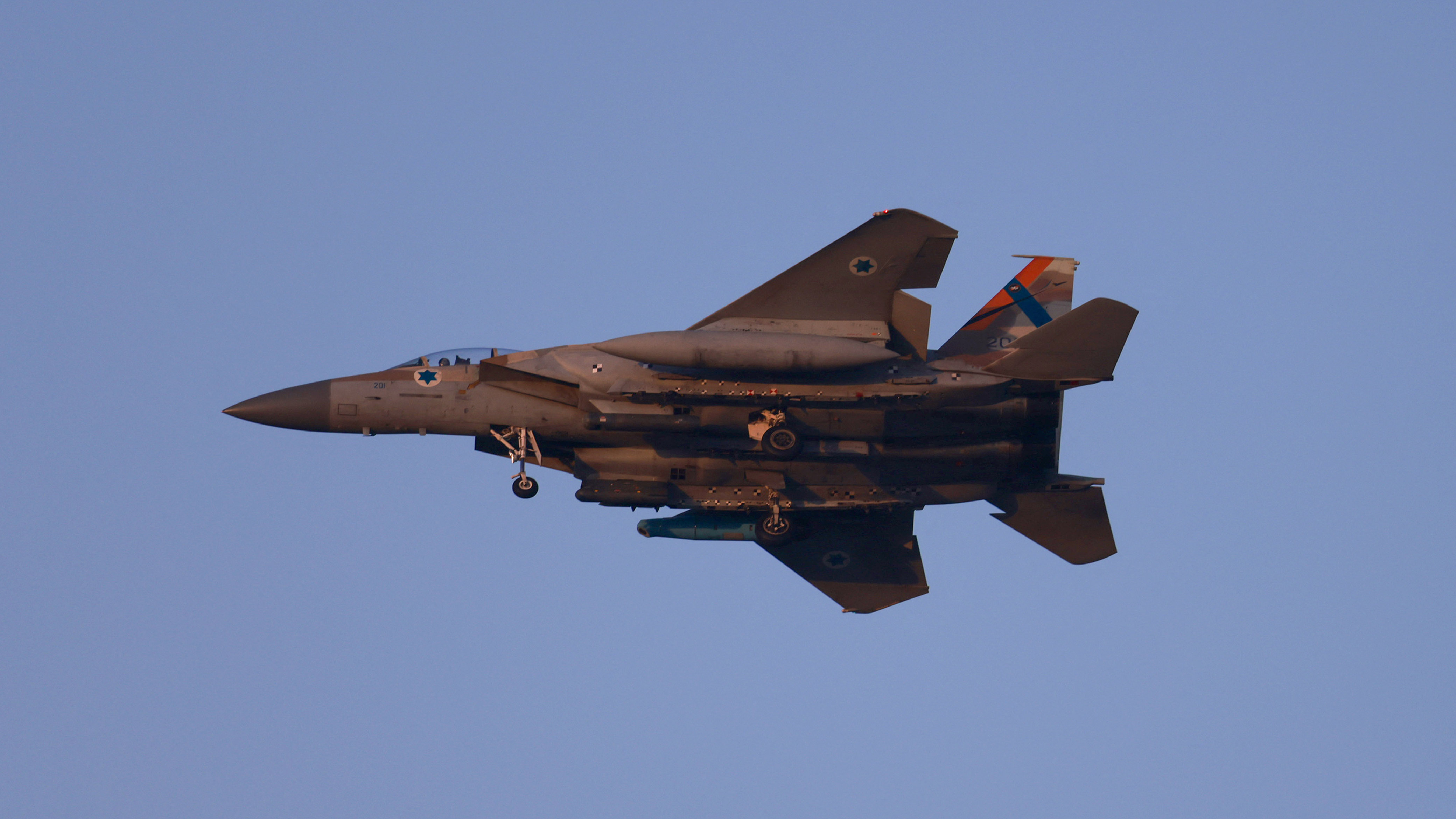
Trump & Netanyahu Unpack Major Strikes on Iran: A Preventative Stance Against Regional Threats
In a dramatic escalation of geopolitical tensions, former U.S. President Donald Trump and Israeli Prime Minister Benjamin Netanyahu jointly announced and justified a series of major combat operations targeting Iran. These unprecedented strikes, carried out in close coordination between American and Israeli forces, aimed to dismantle Iran's threatening capabilities and safeguard regional stability. While the actions were unequivocally focused on neutralizing perceived threats emanating from Tehran, the underlying rhetoric from both leaders underscored a deep concern over Iran's potential for aggression, echoing fears that, left unchecked, such capabilities could indeed lead to scenarios where
Iran bombarde Israël (Iran bombards Israel) or unleashes wider devastation.
The joint offensive marked a significant shift in strategy, moving beyond diplomatic pressures to direct military action. Both leaders painted a grim picture of an Iranian regime intent on acquiring nuclear weapons and engaging in destabilizing activities across the Middle East. Their statements provided a detailed rationale for the strikes, emphasizing a commitment to preemptive defense and the protection of their respective nations and allies.
The Strategic Rationale: Neutralizing Iran's Existential Threat
The justifications offered by Donald Trump and Benjamin Netanyahu for the extensive military operations against Iran were forceful and unequivocal, rooted in perceived imminent and existential threats. From the American perspective, Trump declared the objective was to "defend the American people by eliminating the imminent threats that represents the Iranian regime, a vicious group of people very hard and terrible." He went further, vowing to "destroy their missiles and annihilate their ballistic industry," and even to "annihilate their navy," signaling a comprehensive effort to cripple Iran's military capabilities. Trump's candid admission of "failure of negotiations" underscored a belief that diplomatic avenues had been exhausted, leaving military intervention as the only viable option. His call for the Iranian people to "s'emparer" (seize) power also hinted at a broader strategy to destabilize the current regime from within.
Netanyahu's rhetoric was equally stark, framing the strikes as a "preventive measure against Iran to eliminate the threats weighing on the State of Israel." He articulated that the operation was designed to "eliminate the existential threat that the Iranian terrorist regime represents." For decades, Netanyahu pointed out, the "regime des ayatollahs crie 'mort à Israël', 'mort à l'Amérique'," (the regime of the ayatollahs shouts 'death to Israel', 'death to America'), highlighting Iran's consistent anti-Western and anti-Israeli stance. He recounted instances of Iran shedding blood, assassinating Americans, and massacring its own people, emphasizing that "we must not allow this murderous terrorist regime to acquire nuclear weapons that would allow it to threaten all humanity."
The consistent theme from both leaders was the imperative to prevent Iran from developing nuclear weapons. This goal, they argued, was not merely a matter of regional security but a global imperative. The fear that Iran's hostile intentions, coupled with advanced weaponry, could result in direct and devastating attacks on Israel, or other regional allies, was a central pillar of their strategic communication. The operations were, therefore, framed as a defensive necessity, a decisive move to disarm a dangerous adversary before it could inflict irreparable harm.
Key Targets and the Scope of Operations
The joint US-Israeli offensive against Iran was characterized by its broad geographical scope and the strategic importance of the targets hit. Reports indicated a series of strong detonations across multiple Iranian cities, signaling a coordinated and widespread campaign. While Tehran, the capital, was a primary focus, it was by no means the sole target.
*
Tehran: The capital experienced significant strikes, with multiple strong detonations and plumes of thick smoke rising from various districts. The Pasteur district, a highly sensitive area, was reportedly hit. This district is strategically significant as it houses the residence of Supreme Leader Ali Khamenei and the presidency, suggesting an aim to directly impact the regime's core leadership infrastructure.
*
Isfahan: Located in the central part of the country, Isfahan was also targeted. This city is known for its critical industrial and nuclear facilities, making it a logical choice for strikes aimed at Iran's military and atomic ambitions.
*
Qom: The holy city of Qom, also in central Iran, was reportedly among the affected locations. While its religious significance is paramount, it may also host sites linked to the regime's ideological or logistical networks.
*
Karaj: Situated west of Tehran, Karaj was another city where explosions were reported, potentially targeting military or industrial complexes contributing to Iran's overall capabilities.
*
Kermanshah: In western Iran, Kermanshah also faced strikes. The Israeli army specifically mentioned attacking "several military objectives belonging to the Iranian regime in the west of Iran," aligning with reports from this region.
*
Tabriz: This city was also identified as a target in some reports, expanding the reach of the operations further into different regions of Iran.
The broad array of targets, stretching from the country's capital and religious centers to industrial hubs and western military installations, indicates a comprehensive effort to degrade Iran's military infrastructure, especially those elements perceived as contributing to its missile capabilities or nuclear program. Furthermore, initial announcements suggested that strikes were not confined solely to Iran but had also taken place in "several countries in the Middle East," although specifics on these additional locations and the nature of those operations remained less detailed. This wider scope suggests a potential effort to dismantle Iranian proxies or influence networks across the region, which are often viewed as extensions of Tehran's direct threat, including its ability to foment conflict and ultimately launch proxy attacks that could prelude a direct scenario where
Explosions Rock Iran: US-Israel Launch Joint Offensive could spiral into a broader regional war.
The Broader Strategic Implications and Regional Fallout
The joint US-Israeli strikes on Iran carry profound strategic implications, reshaping the dynamics of the Middle East and potentially influencing global energy markets, international diplomacy, and the proliferation of advanced weaponry. The immediate fallout involves an intensely heightened state of alert across the region, with various actors weighing their responses and bracing for potential retaliation.
One of the most significant implications is the overt abandonment of diplomatic restraint in favor of military action, particularly after what Trump termed the "failure of negotiations." This shift signals a new, more confrontational era in dealing with Iran, moving away from the P5+1 framework that sought to curb Iran's nuclear ambitions through sanctions and dialogue. The message from Washington and Jerusalem is clear: the development of nuclear weapons by Iran is a red line that will be enforced by force if necessary, underscoring the urgency to prevent a scenario where
US-Israel Strikes Iran: Targets & Nuclear Threat Aims could provoke a much larger, global catastrophe.
For regional stability, the strikes introduce an immense amount of uncertainty. Iran has historically shown a willingness to retaliate, either directly or through its extensive network of proxies, including Hezbollah in Lebanon, various militias in Iraq and Syria, and the Houthis in Yemen. Any retaliatory action could quickly escalate into a broader regional conflict, drawing in other states like Saudi Arabia, the UAE, and potentially even Turkey. The potential for cyber warfare and asymmetric attacks also looms large, adding layers of complexity to the security landscape.
Globally, the strikes have implications for energy security, given the Middle East's role as a major oil and gas producer. Any disruption to shipping lanes or infrastructure could send shockwaves through international markets. Furthermore, the actions set a precedent for pre-emptive strikes against perceived nuclear threats, potentially influencing how other nations approach similar challenges. It also tests the resolve of international bodies and frameworks designed to prevent proliferation and de-escalate conflicts.
Navigating the Aftermath: Analysis and Future Outlook
The aftermath of such significant military operations against a state actor like Iran demands careful analysis and foresight into potential future scenarios. The core challenge for the international community will be to prevent further escalation and to manage the ripple effects across an already volatile region.
**Key Considerations Post-Strikes:**
1. **Iranian Response:** Iran's leadership faces immense pressure to respond to these attacks. The nature of this response—whether direct military retaliation, intensified proxy actions, or a strategic shift in its nuclear program—will be critical. A measured response aimed at de-escalation, or conversely, an aggressive one, will dictate the immediate future of the conflict. The emphasis on degrading Iran's ballistic missile capabilities directly addresses the capacity for scenarios like Iran bombarding Israel, making Iranian rearmament or diversification of threats a key concern.
2. **Regional Alliances:** The strikes will likely solidify existing alliances and potentially forge new ones. Countries feeling threatened by Iran might draw closer to the US and Israel, while others might condemn the intervention, potentially leading to increased fragmentation in the region.
3. **Diplomatic Pathways:** Despite Trump's declaration of negotiation failures, the long-term resolution of the Iranian nuclear issue and regional stability will inevitably require diplomatic engagement. The question is whether these strikes have created new leverage for future talks or have irrevocably closed certain doors. International mediators will have a crucial role in exploring any potential avenues for dialogue.
4. **Domestic Impact in Iran:** Trump's call for the Iranian people to "seize power" highlights a strategy of internal destabilization. The long-term impact of the strikes on domestic dissent and political stability within Iran will be a significant factor.
5. **Weaponry and Proliferation:** The stated goal of depriving Iran of nuclear weapons capability brings the issue of proliferation to the forefront. The success or failure of these strikes in achieving that objective will have far-reaching consequences for non-proliferation treaties and the global security architecture.
Ultimately, the future outlook is fraught with uncertainty. While the strikes aimed to neutralize immediate threats, they also ignited a new phase of confrontation. The efficacy of these operations in permanently curtailing Iran's ambitions will be tested in the coming months and years. The world watches keenly to see if this decisive action can pave the way for a more stable Middle East, or if it merely deepens the cycles of conflict and retaliation that have long plagued the region.
Conclusion
The joint US-Israeli strikes on Iran, spearheaded by the pronouncements of Donald Trump and Benjamin Netanyahu, represent a watershed moment in the intricate geopolitics of the Middle East. Presented as a necessary, preemptive measure to dismantle Iran's threatening military and nuclear capabilities, these operations underscored a firm resolve to neutralize what both leaders termed "imminent" and "existential" threats. The stated aim was clear: to prevent an aggressive Iranian regime from acquiring nuclear weapons and to curb its regional destabilizing activities, thereby mitigating the very real possibility of scenarios where Iran might launch devastating attacks against Israel or other nations. As the region navigates the volatile aftermath, the international community faces the critical challenge of managing escalation, fostering dialogue, and ultimately working towards a lasting peace that addresses the core security concerns driving such drastic military interventions.